
Dubai Free Zone Mainland Operating Permit: Complete Guide to Dubai Free Zone New Policy 2025
Dubai Free Zone Mainland Operating Permit is a legal authorisation that allows free zone companies to operate directly in the Dubai mainland without establishing a full mainland company. This permit is the core outcome of the Dubai free zone new policy 2025 and the Dubai business law update 2025, introduced to give free zone companies operating in mainland Dubai a formal legal framework.
In simple terms, if your company is registered in any Dubai free zone, you can now use the Dubai mainland operating permit to legally provide services, sign contracts, and generate revenue within the Dubai mainland. This system is commonly referred to as the free zone to mainland permit Dubai and represents one of the most important structural changes in Dubai’s company formation ecosystem.

What Is Dubai Free Zone Mainland Operating Permit?
Dubai Free Zone Mainland Operating Permit is a temporary business permit issued by Dubai authorities that enables free zone companies to conduct approved commercial and professional activities in the Dubai mainland. The permit is linked to the company’s existing free zone license, which means the company does not need to establish a new mainland entity.
This structure allows a company to retain its free zone registration while gaining legal access to the mainland market. For this reason, the permit is also described as a mainland business permit Dubai and is considered a hybrid model between free zone and mainland business structures.
The main purpose of this permit is to allow businesses to test the Dubai mainland market, serve local clients, and generate onshore revenue while maintaining the financial and ownership benefits of a free zone license.According to the Dubai Department of Economy and Tourism, the new operating permit allows free zone companies to access the mainland market under a regulated legal framework.
Dubai Business Law Update 2025: Legal Background
Before the Dubai business law update 2025, free zone companies were not legally allowed to operate directly in the Dubai mainland. They were required to appoint local agents, distributors, or establish a completely separate mainland company.
This legal separation limited the growth potential of free zone companies and created unnecessary operational complexity. From a regulatory perspective, free zone companies were largely restricted to international or cross-border activities, even though they were physically based in Dubai.
Under the Dubai investment policy update, the government identified this structure as a major growth barrier. As a result, the Dubai free zone new policy 2025 was introduced to integrate free zone companies into the mainland economy through a controlled legal framework.
Can Free Zone Companies Work in Mainland Dubai Now?
Yes. As of 2025, free zone companies can legally operate in mainland Dubai through the Dubai mainland operating permit. However, this access is regulated and limited to approved activities and business sectors.
This means that not every free zone company is automatically eligible. Dubai free zone mainland permit eligibility depends on the nature of the business activity and whether it falls under the categories approved by Dubai authorities.
The objective of this system is to promote free zone mainland business Dubai while maintaining regulatory oversight and compliance with local business laws.
Free Zone to Mainland Permit Dubai: How the Model Works
The free zone to mainland permit Dubai creates a hybrid operational model. The company remains legally registered in a free zone but is authorised to operate commercially within the Dubai mainland.
This allows the company to sign contracts with mainland clients, issue invoices, and generate revenue directly from onshore business activities. From a legal perspective, the company remains a free zone entity but functions operationally as a mainland service provider.
The permit is designed as a temporary authorisation, typically issued for six months and renewable. This structure allows companies to enter the mainland market without making a long-term financial commitment to a full mainland setup.
For this reason, the cost of free zone to mainland permit Dubai is significantly lower than establishing a full mainland company, making it attractive for startups and small to medium enterprises.
Dubai Free Zone New License Rules and Market Impact
The Dubai free zone new license rules have significantly expanded the practical scope of free zone licenses. Previously, free zone licenses were primarily associated with international operations and offshore business models.
Under the new system, Dubai free zone license benefits now include legal access to the Dubai mainland market. This means free zone companies are no longer limited to cross-border clients and can directly participate in the local economy.
As a result, Dubai company formation news now focuses heavily on free zone vs mainland Dubai 2025 as a strategic comparison rather than a fixed structural choice.
Why This Policy Changes the Dubai Business Setup Model
The Dubai business setup latest rules have transformed the company formation process into a modular and scalable system. Business owners are no longer forced to choose between free zone and mainland structures at the initial stage.
Instead, companies can start in a free zone, use the Dubai free zone mainland operating permit to access the mainland market, and later upgrade to a full mainland license if required.
This phased growth model aligns with the Dubai investment policy update and positions Dubai as one of the most flexible business environments globally.
Dubai Free Zone Mainland Permit: Eligibility, Process and Cost
Dubai Free Zone Mainland Operating Permit is not just a policy announcement. It is a practical legal system with defined eligibility criteria, a structured application process, and a specific cost model. Understanding the Dubai free zone mainland permit eligibility and the Dubai free zone mainland permit process is essential, because not every free zone company automatically qualifies for this permit.
The purpose of this framework is to allow free zone companies operating in mainland Dubai while maintaining regulatory control and compliance with local business laws.
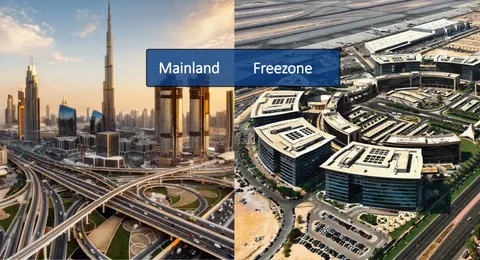
Dubai Free Zone Mainland Permit Eligibility
Dubai free zone mainland permit eligibility depends primarily on the nature of the company’s business activity. Only free zone companies whose activities fall under the categories approved by the Dubai Department of Economy and Tourism are eligible to apply.
In general, professional services, consulting firms, IT and technology companies, digital businesses, marketing agencies, technical services, and business support services are among the most commonly eligible sectors. Highly regulated sectors such as banking, insurance, healthcare, legal services, and financial advisory typically require additional approvals or are restricted in the initial phase.
This means the Dubai free zone mainland operating permit is not an open license for all businesses. The government’s objective is to enable free zone mainland business Dubai for non-sensitive and low-risk sectors, while keeping strict regulatory oversight over critical industries.
To qualify, the company must hold a valid free zone license, must be fully compliant with its free zone authority, and must not have any outstanding legal or regulatory violations.The policy was officially announced through the Dubai Media Office as part of Dubai’s long-term economic reform strategy.
Can Free Zone Companies Work in Mainland Dubai Without This Permit?
No. Even after the Dubai free zone new policy 2025, free zone companies cannot legally operate in the Dubai mainland without obtaining the Dubai mainland operating permit.
The policy does not give automatic freedom to all free zone companies. Instead, it creates a legal gateway through the free zone to mainland permit Dubai system. Without this permit, any free zone company providing services, signing contracts, or issuing invoices in the mainland would still be considered non-compliant and subject to regulatory action.
In practical terms, the Dubai free zone mainland operating permit is now the mandatory legal requirement for free zone companies that want to access the mainland market.
Dubai Free Zone Mainland Permit Process Explained
The Dubai free zone mainland permit process is designed to be straightforward and business-friendly. The application is typically initiated through the company’s respective free zone authority, which then coordinates with the Dubai Department of Economy and Tourism.
During the application, the company must submit its free zone license details, proposed mainland business activities, and a clear description of how the business intends to operate within the Dubai mainland.
Authorities review the application to ensure that the requested activities fall within the approved categories and do not violate any regulatory restrictions. Once approved, the Dubai mainland operating permit is issued, usually with a validity of six months.
The permit is renewable, provided the company remains compliant and continues to operate within the approved activity scope. One of the key advantages of this system is that a physical mainland office is not mandatory. Companies can continue using their free zone address while legally serving mainland clients.
Cost of Free Zone to Mainland Permit Dubai
The cost of free zone to mainland permit Dubai is intentionally structured to be affordable, especially when compared to the cost of setting up a full mainland company.
In most cases, the Dubai Free Zone Mainland Operating Permit costs approximately AED 5,000 for a six-month period. This makes it a low-cost entry model for businesses that want to explore the Dubai mainland market.
By comparison, a full mainland license often involves higher annual licensing fees, mandatory office rent, Ejari registration, additional compliance costs, and visa-related expenses. The total cost of a full mainland setup can easily exceed AED 15,000 to AED 30,000 or more annually.
From a strategic perspective, the Dubai free zone mainland operating permit allows businesses to enter the mainland market with minimal financial risk and scale gradually based on performance.
Dubai Free Zone Mainland Permit vs Mainland License
It is important to understand that the Dubai free zone mainland operating permit is not the same as a full mainland license. Both structures serve different business objectives.
A mainland license is suitable for companies that want a permanent and fully independent presence in the Dubai mainland, including physical offices, long-term contracts, and unrestricted local operations.
The Dubai free zone mainland operating permit, on the other hand, is designed for flexibility. It allows free zone companies to test the mainland market, serve local clients, and generate onshore revenue without committing to a full mainland structure.
This is why the free zone vs mainland Dubai 2025 comparison is no longer about which option is better, but about which option fits the company’s current growth stage and long-term strategy.
Why This Process Matters for Dubai Business Setup
The Dubai business setup latest rules reflect a shift toward a phased and modular business model. Instead of forcing entrepreneurs to make large upfront investments, Dubai now offers a scalable pathway.
Companies can start in a free zone, use the Dubai free zone mainland operating permit to access the mainland market, and later upgrade to a full mainland license if the business justifies it.
This approach aligns with the Dubai investment policy update and positions Dubai as one of the most flexible and entrepreneur-friendly business environments in the world.
Benefits, Commercial Impact and Strategic Advantages
The Dubai Free Zone Mainland Operating Permit is not just a regulatory change. It has a direct commercial impact on how businesses operate, scale, and generate revenue in the UAE. From a strategic point of view, this permit fundamentally changes the cost structure, market access, and growth potential for free zone companies operating in mainland Dubai.
For many businesses, the key question is no longer whether they should choose a free zone or mainland structure, but how they can use both models together in the most efficient way.
Benefits of Free Zone Mainland Operating Permit
The most important benefit of the Dubai free zone mainland operating permit is direct access to the Dubai mainland market without the need to establish a full mainland company. This means free zone companies can legally serve local clients, participate in mainland projects, and generate onshore revenue while retaining their free zone registration.
This structure allows companies to maintain 100 percent foreign ownership, continue benefiting from free zone tax incentives, and avoid the higher operational costs associated with full mainland setups. At the same time, they gain the commercial flexibility of a mainland business.
Another major benefit is speed. The free zone to mainland permit Dubai can be obtained much faster than a full mainland license. This allows businesses to respond quickly to market opportunities, client demands, and new contracts without long approval cycles or heavy compliance requirements.
From a risk perspective, the permit also reduces financial exposure. Companies can enter the Dubai mainland market with a relatively low investment, test demand, and scale operations only when the business model is proven.
Commercial Impact on Free Zone Businesses
The commercial impact of this policy is significant, especially for service-based and digital companies. Before this reform, free zone companies were largely restricted to international clients or offshore markets. Now, free zone mainland business Dubai has become a viable and legal growth path.
This means consulting firms, IT companies, marketing agencies, software providers, and professional service businesses can directly target Dubai-based clients. They can sign local contracts, invoice in the local market, and build long-term relationships with UAE customers.
For many businesses, this leads to higher revenue potential, stronger brand presence in the local market, and improved credibility when dealing with government entities, corporate clients, and regional partners.
From an operational standpoint, companies can now centralise their teams in one free zone location while serving both international and local markets. This creates efficiency in staffing, administration, and compliance management.
Cost Efficiency Compared to Full Mainland Setup
One of the strongest advantages of the Dubai free zone mainland operating permit is cost efficiency. Setting up and maintaining a full mainland company involves higher licensing fees, mandatory office space, Ejari registration, and ongoing compliance costs.
With the free zone to mainland permit Dubai, businesses avoid most of these expenses. There is no requirement for a physical mainland office, no need for separate trade name registration, and no additional corporate structure.
This makes the permit particularly attractive for startups, SMEs, and international companies that want to explore the Dubai market without committing to high fixed costs.
From a financial planning perspective, the permit allows companies to allocate capital toward growth, marketing, and operations rather than administrative overhead.
Free Zone vs Mainland Dubai 2025: Strategic Comparison
The free zone vs mainland Dubai 2025 debate has shifted from a structural choice to a strategic one. Previously, businesses had to decide at the beginning whether they wanted a free zone company or a mainland company. That decision was often irreversible and costly to change.
Under the new system, businesses can adopt a phased strategy. They can start with a free zone setup, use the Dubai mainland operating permit to access the local market, and later upgrade to a full mainland license if the business reaches a scale where permanent local presence is required.
This makes the free zone structure a low-risk entry point and the mainland structure a long-term expansion tool. Both models now work together rather than competing with each other.
Dubai Free Zone License Benefits in the New System
Dubai free zone license benefits have expanded significantly under the new policy. In addition to traditional advantages such as full foreign ownership, tax efficiency, and simplified visa processes, free zone licenses now offer legal access to the Dubai mainland market.
This effectively removes the biggest historical limitation of free zone companies. Businesses no longer have to choose between ownership benefits and market access. They can now have both.
For international investors, this makes Dubai one of the most attractive jurisdictions globally. Few countries offer a system where foreign companies can retain full ownership, operate in a regulated free zone, and still legally access the domestic market.
Who Should Use the Free Zone Mainland Operating Permit?
The Dubai free zone mainland operating permit is particularly suitable for businesses that are in a growth or market-entry phase. This includes startups, digital companies, service providers, consultants, and international firms entering the UAE for the first time.
It is also ideal for companies that already operate in a free zone and want to expand their client base into the local Dubai market without restructuring their entire corporate setup.
For large enterprises or businesses that require physical retail presence, extensive local staffing, or heavy regulatory approvals, a full mainland license may still be the better long-term option.
However, for most modern service-based and technology-driven businesses, the permit provides a balanced combination of flexibility, cost efficiency, and legal security.
Strategic Business Value of the Permit
From a strategic perspective, the Dubai free zone mainland operating permit transforms Dubai into a modular business environment. Companies are no longer locked into rigid structures. Instead, they can design their business setup based on real market performance and growth stages.
This policy encourages experimentation, innovation, and entrepreneurship. Businesses can test new services, enter new sectors, and explore new client segments without making irreversible investments.
In practical terms, this makes Dubai one of the most competitive global hubs for business expansion, especially for companies targeting both regional and international markets.
Compliance, Legal Limitations, Tax Implications and Strategic Recommendations
While the Dubai Free Zone Mainland Operating Permit offers significant flexibility and commercial advantages, it is not a replacement for full legal compliance. Businesses must clearly understand the regulatory boundaries, legal limitations, and tax implications before operating in the Dubai mainland under this permit.
This section is critical because most legal and financial risks arise not from the permit itself, but from misunderstanding how it should be used in practice.
Regulatory Compliance Requirements
Free zone companies operating in mainland Dubai must strictly operate within the scope of activities approved under their Dubai mainland operating permit. The permit is activity-specific, which means companies are only allowed to perform the exact business activities mentioned in the permit.
Any activity outside the approved scope is considered a regulatory violation, even if the company holds a valid free zone license. For example, a consulting company approved for professional services cannot engage in trading or commercial sales unless those activities are explicitly approved.
In addition, companies must continue to comply with their respective free zone authority regulations, including annual license renewals, visa compliance, corporate filings, and operational reporting. The permit does not replace free zone compliance obligations; it only extends operational rights to the mainland.
Failure to comply with either free zone regulations or mainland permit conditions can result in penalties, permit suspension, or cancellation.
Legal Limitations of the Permit
The Dubai free zone mainland operating permit is a temporary and limited authorisation. It does not grant full commercial rights equivalent to a mainland license.
Companies using this permit cannot establish physical retail outlets, open mainland branches without additional approvals, or engage in unrestricted commercial activities. The permit is designed primarily for service-based and professional operations.
Another important limitation is that the permit does not provide automatic access to all government tenders, regulated industries, or highly sensitive sectors. Businesses in banking, financial services, healthcare, insurance, and legal advisory typically require additional regulatory approvals or a full mainland structure.
This means the permit should be viewed as a strategic entry tool, not a permanent replacement for a mainland company.
Tax Implications and Financial Considerations
From a tax perspective, free zone companies operating in mainland Dubai must carefully evaluate their corporate tax and VAT obligations.
Under UAE corporate tax regulations, companies may still benefit from free zone tax incentives if they meet the qualifying criteria and continue operating primarily within free zone regulations. However, mainland revenue generated through the permit may be subject to different tax treatment depending on the company’s structure and activity classification.
Similarly, VAT registration and compliance are mandatory if the company’s taxable turnover exceeds the applicable threshold. Mainland operations do not exempt a free zone company from VAT obligations.
This makes it essential for businesses to maintain proper accounting records, separate revenue tracking for mainland activities, and professional tax advisory support.
Ignoring tax compliance is one of the biggest risks for companies using the free zone to mainland permit Dubai model.
Common Compliance Mistakes Businesses Make
One of the most common mistakes is assuming that the permit allows unrestricted mainland operations. In reality, the permit is highly controlled and limited to approved activities.Another frequent error is issuing mainland invoices without proper VAT registration or failing to update business activity descriptions when expanding services.
Some companies also assume that the permit removes the need for future mainland licensing. This is incorrect. The permit is designed for flexibility and testing, not for permanent large-scale operations.
These mistakes usually result from treating the permit as a loophole rather than a regulated legal framework.
When a Full Mainland License Becomes Necessary
A full mainland license becomes necessary when the business reaches a stage where it requires permanent physical presence, unrestricted commercial activities, local retail operations, or participation in highly regulated sectors.
Companies that plan to open offices in multiple Dubai locations, hire large local teams, engage in high-volume trading, or bid for major government contracts typically require a full mainland structure.
In such cases, the Dubai free zone mainland operating permit should be used as a transitional phase rather than a long-term solution.
Strategic Recommendations for Businesses
From a strategic perspective, the Dubai free zone mainland operating permit should be used as part of a phased growth model.
The ideal approach for most businesses is to start with a free zone setup, use the permit to test the mainland market, validate demand, build client relationships, and analyse revenue performance.
Once the business reaches a stable growth level, a data-driven decision can be made about upgrading to a full mainland license.
This approach minimises financial risk, preserves ownership benefits, and allows companies to scale based on real market evidence rather than assumptions.
Final Conclusion: The Smart Way to Use This Policy
The Dubai Free Zone Mainland Operating Permit represents one of the most advanced business reforms in Dubai’s history. It transforms the company formation model from a rigid structure into a modular and scalable system.
However, its real value lies not in the permit itself, but in how strategically it is used.
Businesses that treat the permit as a controlled growth tool will gain flexibility, market access, and competitive advantage. Businesses that treat it as a shortcut or loophole risk regulatory issues, tax exposure, and long-term legal problems.
In practical terms, the Dubai free zone mainland operating permit is best viewed as a bridge — not a destination.
It connects free zone efficiency with mainland opportunity, and when used correctly, it creates one of the most powerful business expansion pathways available anywhere in the world.